- Is the Wharton Online Private Equity Certificate Worth the Investment?
- What Is the Wharton Online Private Equity Certificate Program?
- Wharton Private Equity Certificate Program at a Glance
- Curriculum Overview: What You’ll Learn in the Wharton Online Private Equity Certificate Program
- Who Should Take the Wharton Private Equity Program?
- Who Teaches the Wharton Private Equity Program?
- What Is the Wharton Networking Experience Like?
- Is the Wharton Private Equity Program Recognized in the Industry?
- How Much Does the Wharton Private Equity Certificate Cost?
- What Is the Best Private Equity Certificate Program?
- Is Wharton Online’s Private Equity Certificate Program Right for You?
- When This Program Might Not Be the Right Fit
- In-Person Private Equity Program Alternatives
- Final Verdict: Is the Wharton Private Equity Certificate Worth It?
Is the Wharton Online Private Equity Certificate Worth the Investment?
With no shortage of private equity courses and certificates on the market, choosing the right program comes down to depth, credibility, and practical relevance.
The Wharton Online Private Equity Certificate Program combines Wharton faculty oversight with practitioner-led training from Wall Street Prep. In this review, we assess whether that combination delivers sufficient value relative to the program’s cost and time commitment.

-
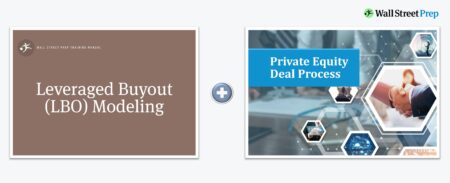
The program teaches the full private equity deal lifecycle, emphasizing applied analysis, LBO modeling, and real transaction scenarios rather than theory alone.
-
It is best suited for early- to mid-career professionals with a solid foundation in accounting, Excel, and financial modeling.
-
Instruction combines Wharton faculty oversight with practitioner-led training from Wall Street Prep, mirroring how PE professionals are trained on the job.
-
While it does not provide job placement, the program focuses on building practical skills and deal readiness to improve interview performance and on-the-job effectiveness.
-
Priced at $5,000, the certificate sits in the mid-range of PE programs, balancing brand credibility, hands-on skill development, and networking access.
The Wharton Private Equity Certificate is one of several structured training options available to professionals who want to deepen the concepts and practical technical methods investment professionals deploy in both evaluating and executing private transactions.
People enter private equity from a range of backgrounds—investment banking, consulting, corporate finance, or entirely different sectors—but the challenge is often the same: there’s no formal onboarding, even though expectations are high from day one.
Through Wharton’s collaboration with Wall Street Prep, this program gives you the same practical foundation firms rely on to ramp up their own teams.
In this review, we’ll take a look at what the Wharton Private Equity Certificate covers, who teaches it, how it’s structured, and how it compares to other private equity certificate programs so you can determine whether it’s worth the investment for your goals.
What Is the Wharton Online Private Equity Certificate Program?
The Wharton Private Equity Certificate Program is an 8-week, self-paced online program designed for early- and mid-career professionals who want to build the analytical and commercial toolkit used inside private equity firms.
The curriculum follows the private equity investment process from start to finish, covering how firms source opportunities, evaluate risk, structure transactions, and manage portfolio companies. Emphasis is placed on understanding a firm’s investment strategy, aligning deals with broader corporate strategy, and applying judgment across the buyout lifecycle.
Participants develop technical expertise through applied coursework, real-world case studies, guest speaker sessions, and live weekly office hours. Core skill areas include:
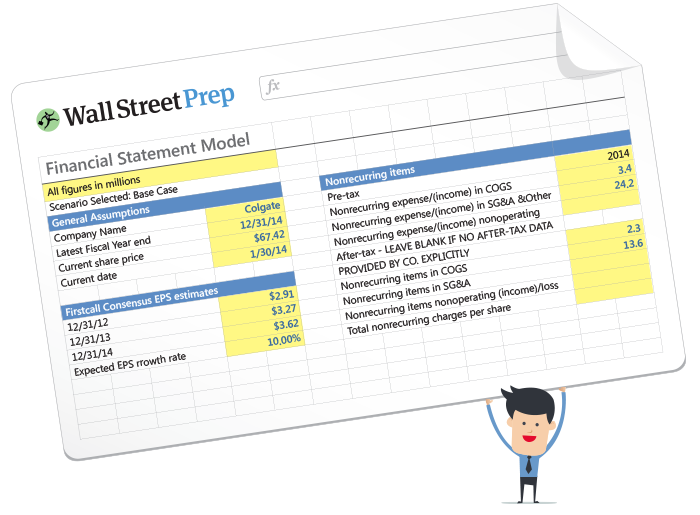
- Financial modelling and hands-on work with professional valuation models
- Analyzing a firm’s investment strategy and decision-making framework
- Evaluating deals within the broader corporate strategy of portfolio companies
- Applying the private equity investment process to real transaction scenarios
The program is taught by senior Wharton faculty and experienced private equity practitioners who also train incoming investment professionals at leading global firms.
Guest sessions feature industry leaders such as David Rubenstein (The Carlyle Group) and Martin Brand (Blackstone).
Overall, the program balances technical depth with practical application, closely mirroring how private equity professionals are trained on the job. Graduate Chris Bendl of Zurich Insurance describes it as “a highly practical course with relevant industry insights and a solid curriculum.”
Wharton Private Equity Certificate Program at a Glance
How many hours per week does the Wharton PE program require?
It’s approximately 8–10 hours per week for 8 weeks with several optional in-person events, including a certificate ceremony in New York City.
What is the format?
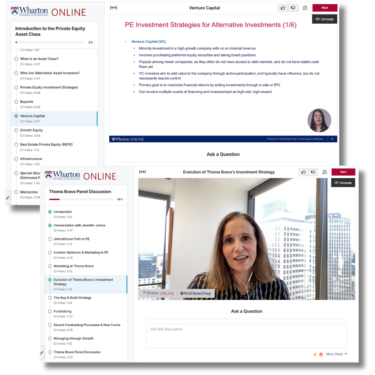
The program consists of self-paced online modules with weekly live office hours and a guest speaker series with leading industry professionals from in and around the private equity industry.
How difficult is the Wharton PE certificate?
Program graduate John Piasta, VP of Business Development at alphabroder, says, “It’s a commitment, but if you put in the work and are up for the challenge, their entire team matches the effort. I would highly recommend it to anyone wanting to explore a career in PE or even looking to sharpen their financial acumen.”
Does the Wharton PE certificate program help with jobs?
The Wharton Online Private Equity Certificate does not offer formal job placement, but it is designed to make participants more competitive for private equity and investment roles.
For early- to mid-career professionals, the value is less about direct placement and more about building credible skills, signaling commitment to the field, and gaining practical experience that can translate into stronger interviews and work performance.
“After completing the Wharton Online PE Program, I felt thoroughly prepared to start my role in PE immediately after graduation,” says Ishita Panwar, who oversees strategy and M&A at Altimetrik. “From day one, I was able to grasp the deal process and contribute effectively, thanks to the practical analysis skills taught during the training.”
Can beginners take it?
You don’t need prior private-equity experience to succeed in the program, but you should be comfortable with basic accounting, financial statements, Excel, and introductory financial modeling.
As soon as you enroll, you’ll get access to prep video content, allowing you to get a jump start before the cohort officially begins.
The program is designed to be background-agnostic, though learners without a finance foundation may need to budget a bit more weekly review time.
How can I learn more about the curriculum?
To learn more about the Wharton Private Equity Certificate Program curriculum, you can download the brochure or register for a free information session.
Curriculum Overview: What You’ll Learn in the Wharton Online Private Equity Certificate Program
| Module | You Will Be Able To |
|---|---|
|
Module 1: Introduction to the Private Equity Asset Class & Investment Framework |
|
|
Module 2: The Private Equity Deal Process
|
|
|
Module 3: Leverage, Accounting Diligence & Deal Structuring |
|
|
Module 4: Private Company Analysis, Valuation & LBO Modeling, Pt. 1
|
|
|
Module 5: Private Company Analysis, Valuation & LBO Modeling, Pt. 2
|
|
|
Module 6: Thinking Like a Private Equity Professional, Pt. 1
|
|
|
Module 7: Thinking Like a Private Equity Professional, Part 2
|
|
|
Module 8: LBO Fundamentals & the Private Equity Case Interview
|
|
Who Should Take the Wharton Private Equity Program?
The program is designed for professionals across the deal ecosystem, with more than half of applicants in mid- to senior-career roles.
Participants commonly come from investment banking, consulting, finance and accounting, real estate, engineering, and other professional services.
Top roles include Investment Banking Analyst, Investment Associate, Private Equity Associate, Financial Analyst, and CFO, with applicants representing leading firms across banking, consulting, technology, and corporate finance.
It’s an ideal fit for those looking to break into private equity, accelerate within the industry, or strengthen their dealmaking and analytical skill set.
Who Teaches the Wharton Private Equity Program?
The program is taught by a mix of Wharton faculty and seasoned private equity practitioners.
Dr. Burcu Esmer (Academic Co-Director, Wharton’s Harris Family Alternative Investments Program)
As Academic Co-Director of Wharton’s Harris Family Alternative Investments Program, Dr. Esmer ensures the curriculum reflects the latest academic research and market trends. Her experience designing and teaching Wharton’s private equity and corporate finance courses brings the same level of rigor and structure to this certificate program, giving participants confidence they are learning from one of the top alternative investments educators in the world.
Scott Roman (Private Equity Program Director, Wall Street Prep)
With buy-side, sell-side, and advisory experience, Scott Roman brings the practitioner’s perspective to the program. He ensures participants aren’t just absorbing theory but are also practicing the exact deal processes, models, and analyses used inside private equity firms today. This balance of academic and practical instruction is a key differentiator of the Wharton program.
Dylan Lam (Head of Private Equity & Private Credit, Wall Street Prep)
Dylan previously spent six years as a Private Equity Senior Associate at Staple Street Capital and began his career as an Investment Banking Analyst at Moelis & Company.
Guest Speakers
The program also features a guest speaker series with leaders from the private equity and alternative investing world, providing direct exposure to senior decision-makers:
- David Rubenstein, Co-Founder & Co-Chairman, Carlyle Group
- Steven Rattner, Chairman, Willett Advisors & former U.S. Treasury Counselor
- Marc Ganzi, CEO of DigitalBridge, a leading digital infrastructure investor
- Martin Brand, Head of North America Private Equity, Blackstone
- Plus numerous other panelists from firms like Thoma Bravo, Ares, Oliver Wyman, and more.
What Is the Wharton Networking Experience Like?
One of the unique aspects of the Wharton Private Equity Certificate is its emphasis on community and networking opportunities.
Community benefits include:
- Invitations to live office hours, webinars, and fireside chats with industry leaders
- Access to a private Slack group for ongoing discussions
- Optional in-person meetups and networking events across LA, London, and NYC, capped off with a closing ceremony in New York.
- Continued access to the graduate community for long-term career connections
This combination of online engagement and in-person networking gives participants access to both peer connections and industry mentors.

In-person meetups allow program graduates, prospective students, faculty, and program directors to connect throughout the year.
Is the Wharton Private Equity Program Recognized in the Industry?
Yes, and this is one of its biggest selling points.
- Wharton has trained leading private equity professionals since the industry’s beginnings, and its name carries global weight across finance. You’ll earn a digital Wharton Online certificate upon completion, giving you a resume and LinkedIn credential that strengthens your professional credibility.
- Wall Street Prep is the leading global online financial education provider trusted to train incoming investment professionals at top private equity and investment banking firms—including Blackstone, KKR, The Carlyle Group, and many others—adding meaningful practical credibility.
- The program builds the deal skills used across the PE career ladder, not just at the associate level. Mid- and senior-career professionals join to sharpen their investment judgment, strengthen modeling and diligence skills, and gain a more structured deal framework.
For professionals looking to stand out in a competitive job market, the combination of Wharton’s brand prestige and Wall Street Prep’s deal-focused training is a unique value proposition.
How Much Does the Wharton Private Equity Certificate Cost?
The program costs $5,000, though learners can pay less thanks to early-enrollment discounts, flexible monthly payment plans, and a $550 tuition assistance award offered on a first-come, first-served basis.
You can also check with your company to see if they offer reimbursement for professional development.
Compared to other certificate programs, Wharton’s price point is in the mid-range:
- Columbia’s VC & PE Program: $24,000–$30,000
- Oxford Private Markets Investments Programme: ~$3,000–$4,000
- CFA Institute Private Equity Certificate: ~$1,500
While not the cheapest option, Wharton balances brand prestige, applied skills, and networking access, which justifies the cost for many professionals.
What Is the Best Private Equity Certificate Program?
The best private equity certificate program depends on your career stage, learning goals, and how directly you want to apply what you learn on the job. Some programs emphasize academic theory, while others focus on hands-on modeling, deal analysis, and real-world private equity workflows.
The chart below compares leading private equity certificate programs across key factors like curriculum depth, instructor background, time commitment, cost, and overall career value—so you can quickly see which option best fits your goals.
| Program | Duration & Format | Price | Live Networking | Best For | Overall Value for Career |
|---|---|---|---|---|---|
|
Wharton Online x Wall Street Prep
|
8 weeks online with live office hours | $5,000 | ✔Lifetime access to community meet ups and events |
|
★★★★★
|
|
Venture Capital Private Equity Program
Columbia Business School Executive Education
|
9–12 months
Online core modules (12 weeks), live online series (2–3 weeks), specialized elective (6 weeks), and optional in-person open-enrollment elective
|
$25,000
(plus travel and accommodation for optional in-person components)
|
●Limited: Includes an optional two-day on-campus networking event |
|
★★★
|
|
Private Equity Certificate
CFA Institute
|
125 hours to complete; access to the learning materials for 12 months | $890 | ✖No |
|
★★★
|
Is Wharton Online’s Private Equity Certificate Program Right for You?
This program is best suited for:
- Investment banking analysts and associates seeking to build PE deal experience
- Corporate finance professionals and MBAs wanting to transition into private equity
- Consultants and operators looking to pivot into PE or investment roles
- Senior professionals who want both brand credibility and practical skills
When This Program Might Not Be the Right Fit
- Professionals without foundational modeling or accounting skills may find the pace challenging. However, Wall Street Prep provides free Excel and accounting resources—as well as pre-course materials upon enrollment—that can help you get up to speed quickly.
- Those looking for a purely academic, theoretical course may prefer a university-based seminar.
In-Person Private Equity Program Alternatives
| Program | Cost | Duration | Fee Includes |
|---|---|---|---|
| HBS Executive Education — Private Equity & Venture Capital | $12,750 | 4 days |
|
| Oxford Saïd — Oxford Private Equity Programme (in-person) | £9,000 | 5 days |
|
| London Business School — Masterclass in Private Equity (in-person) | £7,700 | 4 days |
|
| Wharton Exec Ed — Private Equity: Investing & Creating Value (in-person) | $14,500 | 6 days |
|
Final Verdict: Is the Wharton Private Equity Certificate Worth It?
The Wharton Private Equity Certificate is worth it for professionals seeking both brand credibility and job-ready skills. The program combines academic rigor with real-world deal execution skills, making it one of the strongest options in today’s market.
Participants gain:
- A Wharton Online credential recognized worldwide
- Hands-on LBO modeling and case simulations that mirror the job
- Insights from PE veterans at top firms
- Networking opportunities through in-person happy hours, Slack groups, and an in-person NYC event
With private equity hiring growing rapidly, this program equips participants with the tools and brand credibility to compete.
Download the Wharton Private Equity Certificate brochure or register for a free information session where you can connect directly with the program director.