Skip to main content

- What is the best financial modeling certification?
- A note on bias and methodology
- Our scoring methodology
- Aggregate scores: Top 5 financial modeling certifications
- #1: Wall Street Prep Premium Package — 94/100
- #2: Corporate Finance Institute (CFI) FMVA — 75/100
- #3: Training The Street (TTS) Foundations + Advanced — 74/100
- #4: Breaking Into Wall Street (BIWS) — 73/100
- #5: Wall Street Oasis (WSO) Elite Modeling Package — 67/100
- Which financial modeling certification is right for you?
- Frequently Asked Questions
What is the best financial modeling certification?
The best financial modeling certification depends on what you need it to do for your career, but five programs consistently dominate the market:
- Wall Street Prep’s Premium Package
- CFI’s Financial & Valuation Modeling Certificate
- Breaking Into Wall Street (BIWS) Premium
- Wall Street Oasis’s Elite Modeling Package
- Training The Street’s Foundations and Advanced Certification
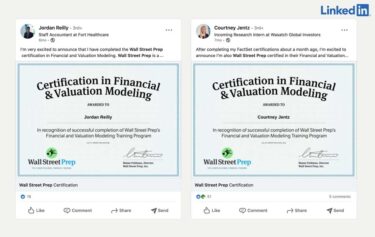
Among these, Wall Street Prep is the only program directly used by 8 of the top 10 bulge-bracket investment banks and most leading private equity firms for their internal analyst and associate training.
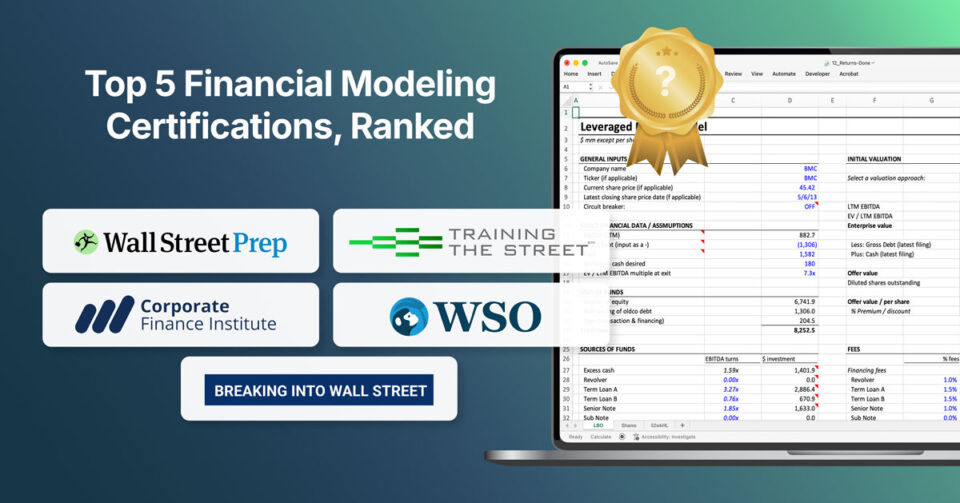
For investment banking, private equity, and equity research candidates targeting top-tier firms, Wall Street Prep offers the strongest employer recognition — 300+ corporate clients including Goldman Sachs, JPMorgan, KKR, and Blackstone use WSP to train their own analyst classes. For broader corporate finance audiences outside of mature financial markets, CFI’s FMVA is the largest by enrollment.
This guide scores all five leading programs against three weighted dimensions: program quality (40%), employer credibility (35%), and cost (25%), producing an aggregate index out of 100.
A note on bias and methodology
This guide is published by Wall Street Prep, and we score Wall Street Prep’s Premium Package as the #1 financial modeling certification on this list. You should know that going in.
What we’ve tried to do is be honest about why. Rather than asking you to take our word for it, we’ve built a scoring methodology with published weights — and evaluated all five programs against the same criteria. The methodology is laid out in the next section. The corporate client lists, named instructor backgrounds, pricing models, and institutional partnerships that drive each program’s score are all publicly verifiable.
We’ve also tried to be honest about what competitors do well. CFI has built a meaningful global business with real value for its target audience. BIWS delivers high quality and remains strong for IB candidates. Training The Street is the only provider other than Wall Street Prep with institutional credibility. Wall Street Oasis has built something genuine around community-integrated learning. Each of these programs serves a real audience well, and the scoring reflects that.
If your goal is investment banking, private equity, or corporate development at a top-tier firm — the audience we built Wall Street Prep for — we believe the methodology supports the result. If your goal is something different, the guide and the scores will tell you which program fits better, even if it isn’t ours.
— Matan Feldman, Founder & CEO, Wall Street Prep
Our scoring methodology
Most “best financial modeling course” listicles rank programs by price, video hours, or refund policies. Those are important, but miss most of what actually matters when you’re paying for a credential meant to advance your career.
We built a scoring methodology around the three dimensions that matter to career-driven buyers: Quality (40%), Employer Credibility (35%), and Cost (25%). Each dimension breaks into subcategories, scored 1–10, that roll up to an aggregate index from 0 to 100.
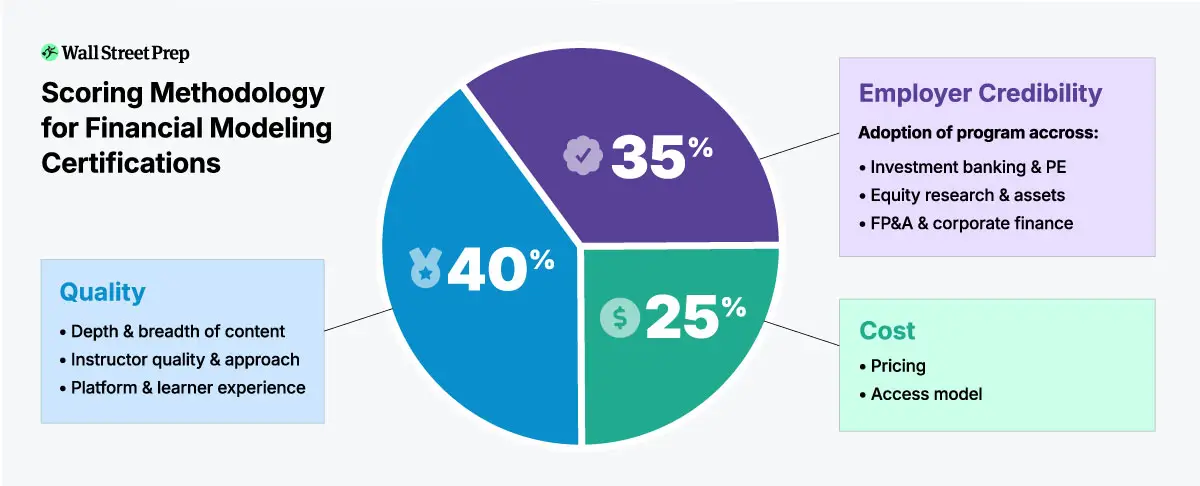
Wall Street Prep’s financial modeling certification scoring methodology: weighted across Quality (40%), Employer Credibility (35%), and Cost (25%).
Each subcategory score reflects our assessment of publicly verifiable factors — corporate client lists, instructor backgrounds, pricing models, and institutional partnerships. Where we’ve drawn judgment calls, the rationale is explained in the program profiles below. You’re welcome to disagree with any specific score or re-weight the methodology to fit your own priorities; the framework is transparent precisely so you can do that.
The scoring tables below summarize the results. Before getting to the numbers, here’s how the dimensions actually played out across the five providers — the specific evidence and judgments behind the scores.
Quality (40% of total score)
We view quality as the most important and most measurable dimension of a financial modeling certification, which is why it carries the highest weight in our scoring. We evaluate it across three subcategories:
| Certificate Program Quality |  |
 |
 |
 |
 |
|---|---|---|---|---|---|
| Depth and Breadth of Content | 10.0 | 9.0 | 9.0 | 8.0 | 4.0 |
| Instructor Quality and Teaching Approach | 10.0 | 8.0 | 9.0 | 5.0 | 7.0 |
| Platform & Learner Experience | 9.0 | 10.0 | 7.0 | 7.0 | 5.0 |
| Category Score | ⭐9.7 | 9.0 | 8.3 | 6.7 | 5.3 |
Depth and breadth of content. This measures how much of the core analyst skill set the program covers, and how deep into each area the content goes. WSP scores highest because it covers the full range of foundational modeling, advanced transactions, and role-specific applications at greatest depth. BIWS and CFI follow closely, both with broad coverage; WSO is competitive on breadth but slightly thinner on advanced topics. TTS is meaningfully thinner across the catalog despite its institutional pedigree.
Instructor quality and teaching approach. Large portions of the WSP and BIWS programs are taught directly by the companies’ founders — Matan Feldman at WSP and Brian DeChesare at BIWS — who balance a rigorous step-by-step real world modeling training with a conversational, “over the shoulder” style that showcases real deal experience, anecdotes that bring material to life, and how to think through a problem in real time. WSO uses a wider instructor bench with a far less consistent pedagogical experience — some modules are excellent, others less so.
Platform, video, and learner experience. Production quality is largely comparable across the leading self-study providers; CFI’s production quality is the slickest in the category, which gives it the edge. TTS’s platform is the outlier on the downside, with weaker functionality around certificate sharing, playback, and navigation.
Employer Credibility (35% of total score)
The core measure of employer credibility is whether employers adopt the courses to train their own analysts.
Wall Street Prep stands head and shoulders above the rest by this measure: WSP trains analyst and associate classes at 8 of 10 bulge-bracket investment banks, most elite-boutique and middle-market investment banks, and most leading private equity firms. Training The Street is the closest institutional peer, with a meaningful presence in IB and PE analyst training, though materially behind WSP today.
CFI’s strength is different. It is a leading credential globally for corporate finance and FP&A roles, with particularly strong adoption internationally, but is not used by top-tier US investment banks or private equity firms for analyst training.
None of the other self-study providers in this list have meaningful institutional adoption for IB or PE analyst training. Beyond adoption, how a credential one puts on their resume is perceived by the specific hiring managers is addressed further in the relevant program profiles below.
| Certificate Program Employer Adoption | |
|
|
|
|
|---|---|---|---|---|---|
| Investment Banking and PE | 10.0 | 5.0 | 6.0 | 4.0 | 8.0 |
| Equity Research and Asset Mgmt | 9.0 | 6.0 | 6.0 | 4.0 | 9.0 |
| FP&A and Corporate Finance | 8.0 | 8.0 | 5.0 | 5.0 | 8.0 |
| Category Score | ⭐9.0 | 6.3 | 5.7 | 4.3 | 8.3 |
Cost (25% of total score)
All providers are priced at ~$500, with CFI as the exception. CFI doesn’t actually allow learners to only enroll in the financial modeling program, instead charging $497 per year for an all-you-can-eat buffet across all its certificates on a subscription basis, with frequently available 30% discounts bringing the effective annual price to about $348. Given a) the length of the modeling programs we’re evaluating (most take 100+ hours to complete), and b) the fact that finance professionals almost never need multiple certificates, the recurring vs lifetime access distinction is a material consideration. Three years of CFI runs $1,000+ after discounts vs. $500 one-time for the rest.
| Certificate Program Cost | |
|
|
|
|
|---|---|---|---|---|---|
| Cost Score | 10 | 7 | 10 | 10 | 10 |
| Description | $499 gets lifetime unlimited course access | $497 per year | $497 gets lifetime unlimited access | $499 gets lifetime unlimited access | $500 gets lifetime unlimited access |
Aggregate scores: Top 5 financial modeling certifications
| Rank | Program | Aggregate Score |
|---|---|---|
| #1 | Wall Street Prep Premium Package | ⭐94/100 |
| #2 | CFI FMVA | 75/100 |
| #3 | Training the Street | 74/100 |
| #4 | Breaking Into Wall Street | 73/100 |
| #5 | Wall Street Oasis Elite Modeling | 67/100 |
Published by Wall Street Prep. See methodology and bias disclosure above.
#1: Wall Street Prep Premium Package — 94/100
Wall Street Prep ranks first because it is the institutional standard for financial modeling training at top-tier investment banks and private equity firms in the US.
The Premium Package is the same curriculum these firms use to train their incoming analyst and associate classes — the only major self-study program with that level of direct institutional adoption.
Founded in 2004, WSP started as a corporate training provider for investment banks before opening its programs to individuals. Today, 300+ corporate clients — including Goldman Sachs, JPMorgan, Morgan Stanley, KKR, Carlyle, Blackstone, Bain Capital, Evercore, Lazard, and BlackRock — use Wall Street Prep to train their own analyst and associate classes.
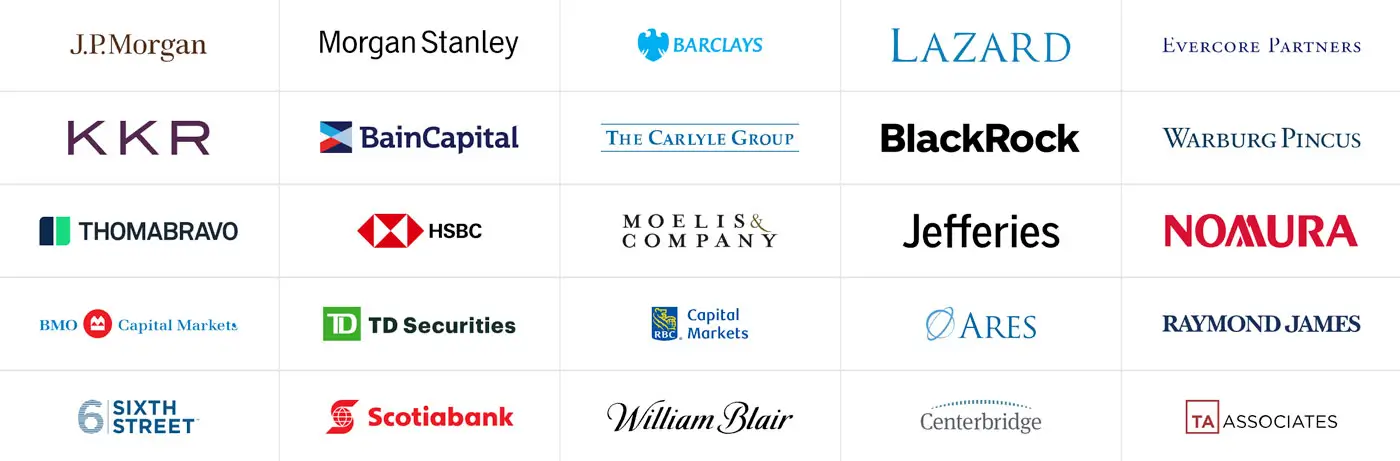
A selection of the 300+ corporate clients training their analyst and associate classes on Wall Street Prep curriculum.
More than 200 universities, including Wharton, Harvard Business School, Stanford, Columbia, Cornell, and Chicago, use Wall Street Prep curriculum to teach financial modeling.
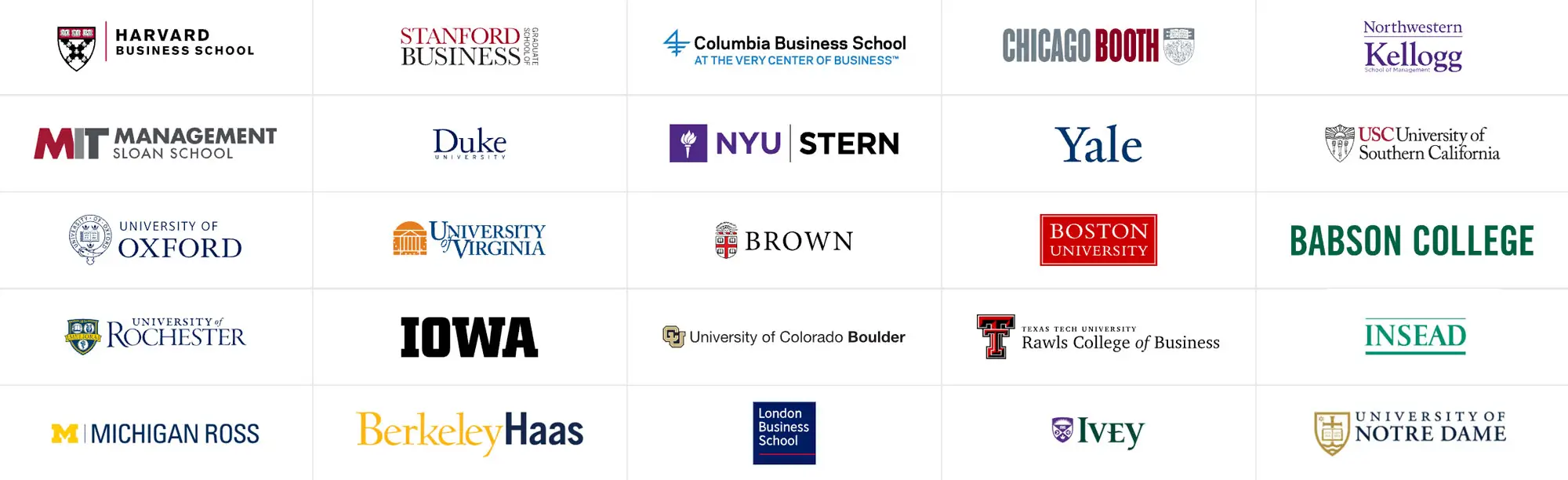
A selection of the 200+ universities using Wall Street Prep curriculum to teach financial modeling.
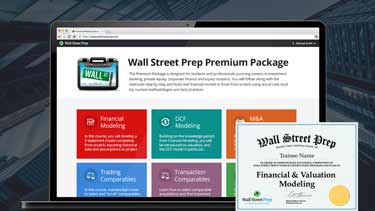
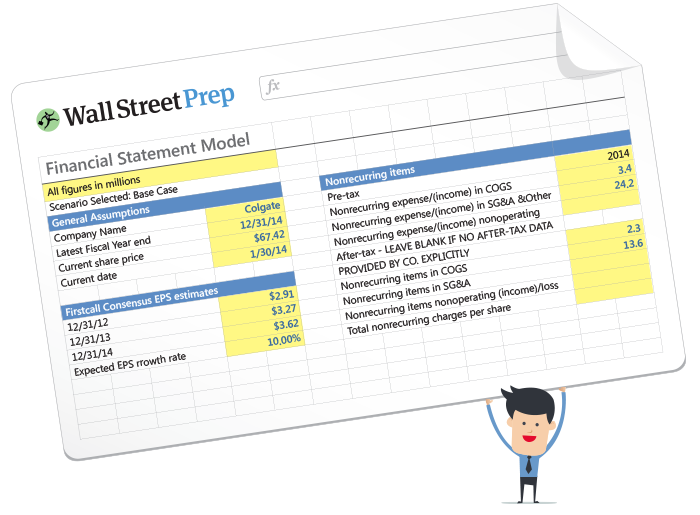
What’s included ($499, lifetime access): Financial Statement Modeling, DCF Modeling, Comparable Company Analysis, M&A Modeling (Accretion/Dilution), LBO Modeling, Trading Comps Modeling, and bonus interview prep content.
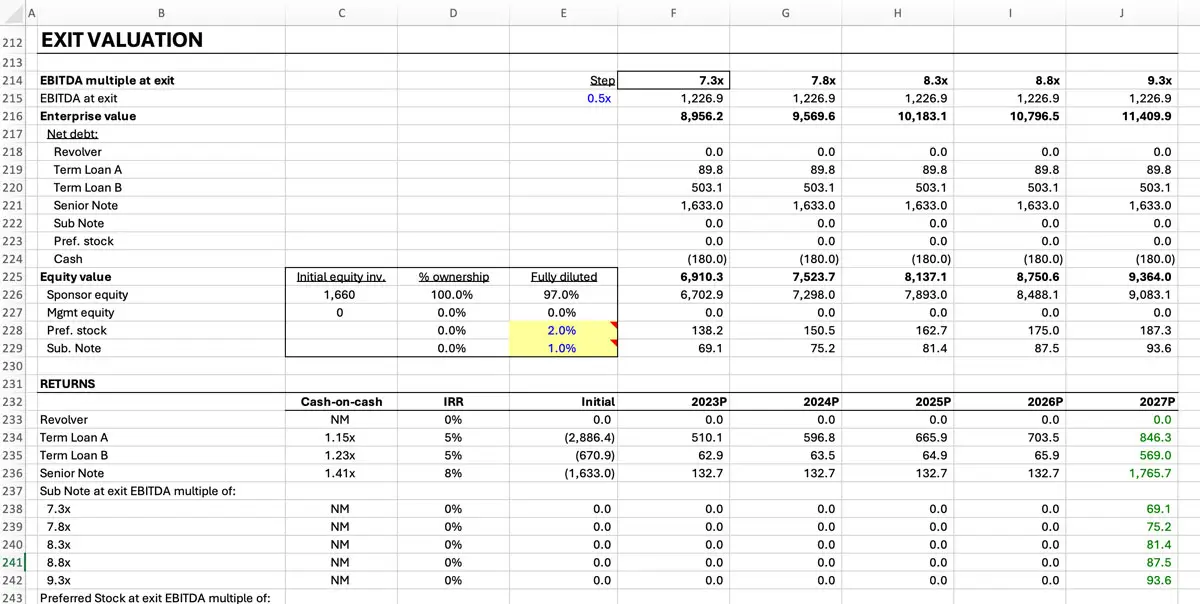
Sample LBO returns analysis from the Wall Street Prep Premium Package.
Instructors: The lead instructor is Matan Feldman, founder and CEO of Wall Street Prep and ex-JP Morgan M&A and Equity Research. Other instructors include former investment bankers and PE associates from Morgan Stanley, JPMorgan, Lazard, Houlihan Lokey, and similar firms. Curriculum built on real models the instructors used during their banking careers.
Best for: Career-driven candidates targeting investment banking, private equity, equity research, and corporate development at top-tier firms.
Limitations: Light on broader corporate finance topics (treasury, working capital management at depth) — those who want a broader corporate finance survey may find CFI more comprehensive.
I started Wall Street Prep in 2004 to teach the way I’d actually learned modeling on the job at JPMorgan — through real deals, real models, and the practitioner habits you only pick up from doing the work. The reason hiring managers at Goldman, KKR, and Blackstone recognize the credential is because their own analyst classes have been trained on this exact curriculum for years. That’s not a marketing claim — it’s the structural reason the credential carries weight.
— Matan Feldman
#2: Corporate Finance Institute (CFI) FMVA — 75/100
CFI’s FMVA ranks second because it is the largest financial modeling program by total enrollment and the leading credential globally for corporate finance and FP&A roles. For buyers targeting roles outside top-tier US IB and PE — particularly internationally — FMVA is often the right answer.
What’s included ($497/year subscription): ~20 required courses and ~15 electives covering accounting, financial modeling, valuation, M&A, FP&A, and adjacent corporate finance topics. The subscription also includes access to all of CFI’s other certificates — useful breadth but sometimes lacking in depth, and largely outside what most modeling buyers need. Bundled library of templates, eBooks, and reference resources.
Pricing: $497 per year. Subscription means access ends if you stop paying — a meaningful structural difference from WSP’s lifetime model. Frequently available 30% discounts bring effective annual price to ~$348.
Instructors: Mix of former practitioners and career corporate finance educators. Instructor bench skews toward middle-market firms, mid-cap corporates, FP&A and consulting backgrounds rather than top-tier investment banks and PE.
Best for: Corporate finance candidates, FP&A professionals, finance career-switchers without a specific top-tier IB/PE target, and international buyers in markets where CFI is the dominant locally-recognized credential.
Limitations: Subscription model creates ongoing cost; less depth on advanced transaction modeling than WSP or BIWS; not used by top-tier US IB or PE firms for internal analyst training. Candidates targeting investment banking, private equity, or corporate development should also know that FMVA on a resume tends to signal a corporate finance or FP&A career path to top-tier US hiring managers — useful if that’s the target, potentially misaligned if the goal is transaction-focused finance.
For a deeper head-to-head, see our Wall Street Prep vs. Corporate Finance Institute comparison.
CFI is the program I most often recommend to candidates who tell me they’re targeting corporate finance or FP&A roles outside the transaction-heavy paths. They’ve built genuine value for that audience and are the dominant credential in many international markets. They’re not trying to do what we do — and we don’t try to do what they do.
— Matan Feldman
#3: Training The Street (TTS) Foundations + Advanced — 74/100
Training The Street is the only provider other than WSP with meaningful institutional credibility in IB and PE analyst training. Founded in 1999, TTS is the closest institutional peer to WSP today, though materially behind on current bulge-bracket adoption.
What’s included ($500, lifetime access): Foundations bundle covering core modeling and valuation; Advanced bundle covering M&A and LBO modeling; role-specific bundles available for IB, PE, Equity Research, Asset Management, FP&A, and Global Markets.
Instructors: Career finance trainers with deep institutional banking client relationships. Less founder-led than WSP and BIWS.
Format: Self-paced online, separate from TTS’s well-known live instructor-led corporate training programs.
Best for: Buyers who specifically want a recognized institutional name in IB or PE training and value TTS’s role-bundle structure.
Limitations: Self-study catalog is meaningfully thinner across role-specific applications than WSP, BIWS, or WSO; consumer brand recognition is lower than the leading self-study providers; platform functionality and user experience lags the category.
TTS has earned its institutional credibility the same way we’ve earned ours — by training analysts at real banks for real deals over more than two decades. Buyers who want a credential with that institutional pedigree have two genuine options: TTS or WSP. Our scoring reflects where WSP leads today, but TTS remains the only true peer in this category.
— Matan Feldman
#4: Breaking Into Wall Street (BIWS) — 73/100
Breaking Into Wall Street, founded by Brian DeChesare in 2007, is positioned specifically for undergraduates and pre-MBA candidates working through the investment banking recruiting funnel. BIWS’s depth and breadth on core modeling content matches the leaders, and the founder-led teaching approach is among the strongest in the category.
What’s included ($497, lifetime access): Financial Modeling Fundamentals, Advanced Financial Modeling, LBO Modeling, M&A Modeling. Individual courses sold separately or bundled. BIWS also sells additional products separately, including a well-known IB Interview Guide, which is not included in the core Premium Package.
Format: Self-paced online, video-heavy with downloadable Excel files and screen-share walkthroughs.
Instructors: Brian DeChesare leads most of the original instruction, with additional former bankers added on specific modules.
Best for: Undergraduate candidates and pre-MBA finance career switchers focused on investment banking recruiting.
Limitations: Narrower institutional adoption at top-tier IB and PE firms than WSP or TTS; less role-specific depth (no PE-specific, FP&A-specific, or real estate-specific advanced certificates); positioning skews to pre-hire recruiting funnel rather than ongoing on-the-job skills. The credential is most associated with undergraduate IB recruiting — MBA students and mid-career candidates may want to weigh whether the brand positioning matches the signal they want to send.
For a deeper head-to-head, see our Wall Street Prep vs. Breaking Into Wall Street comparison.
Brian DeChesare built BIWS as one person with a clear point of view, and that clarity is its strength. His instruction has helped a generation of undergrads break into investment banking, and the category is better for having both BIWS and WSP serving different parts of the same buyer journey for nearly two decades.
— Matan Feldman
#5: Wall Street Oasis (WSO) Elite Modeling Package — 67/100
Wall Street Oasis is best known as the largest finance career community online — its forums have been the default discussion venue for finance candidates and analysts for nearly two decades. WSO entered the modeling certification market more recently (its Elite Modeling Package launched in current form around 2020) and has gained traction primarily through community familiarity.
What’s included ($499, lifetime access): Core modeling courses including Financial Statement Modeling, DCF, LBO, M&A, and Trading Comps, plus WSO community access.
Instructors: Wider instructor bench than WSP or BIWS, with multiple former bankers and finance practitioners across modules. Pedagogical experience is less consistent — modules are excellent, others less so, with less cohesion across modules making it harder for learners to make connections across the content.
Best for: Candidates already active in the WSO community who value the integration of forums, networking, and modeling courses; pre-MBA finance candidates building a recruiting toolkit.
Limitations: Less institutional adoption history than WSP, TTS, BIWS, or CFI. The instructor bench is broader and less consistent than the founder-led programs, producing the variable pedagogical experience reflected in the Quality scoring. WSO’s recognition pattern is unusual: hiring managers who know the WSO forums well may form specific impressions of the community culture and apply them to candidates who chose to credential there. Career-driven buyers whose target hiring managers spend time on WSO should weigh this carefully.
For a deeper head-to-head, see our Wall Street Prep vs. Wall Street Oasis comparison.
WSO’s forum has been the place finance candidates and analysts have asked the questions nobody else would answer for almost twenty years. Their move into modeling certification is logical, and the community angle is genuinely differentiated. The scoring reflects that they’re newer in the credential lane specifically — not in finance education broadly.
— Matan Feldman
Which financial modeling certification is right for you?
The right choice depends on what you’re trying to accomplish. The scoring above produces a ranking based on weighted aggregate value; your individual case may emphasize different criteria, and the methodology is published so you can re-weight it.
If you’re an undergraduate targeting investment banking analyst roles: Wall Street Prep Premium Package. The credential is recognized by every major IB recruiter, and the corporate client list overlaps almost completely with your target employers. BIWS is a credible alternative if your primary focus is undergraduate recruiting prep.
If you’re a pre-MBA analyst preparing for private equity recruiting: Wall Street Prep Premium Package + the Wharton-co-branded Private Equity Certificate. The combination builds your modeling foundation and the PE-specific advanced skills with a Wharton credential that PE hiring managers recognize immediately. WSP scores 10/10 on Investment Banking and Private Equity recognition; no other program scores above 8/10.
If you’re an MBA student or career-switcher targeting corporate finance or FP&A: CFI’s FMVA offers good breadth at accessible pricing — and is genuinely the right choice for many buyers in this segment. For FP&A specifically, WSP’s Wharton-co-branded FP&A Certificate offers deeper modeling skills with stronger academic credentialing.
If you’re already employed in finance and need to fill specific skill gaps: Skip the broad certifications and target specific WSP modules (LBO, M&A, real estate modeling) or the role-specific Wharton and Columbia Business School programs co-created with Wall Street Prep.
If you specifically want a TTS-branded credential: TTS Foundations + Advanced is the right call. Their institutional credibility is the closest peer to WSP, particularly for international IB candidates where TTS has stronger local presence.
If you’re applying to PE or hedge funds from a non-traditional background: The Wharton-co-branded certificates from Wall Street Prep provide a recognizable academic credential paired with practitioner-led training — useful when your background lacks the typical IB-analyst pedigree.
Everything You Need To Master Financial Modeling
Enroll in The Premium Package: Learn Financial Statement Modeling, DCF, M&A, LBO and Comps. The same training program used at top investment banks.
Enroll TodayFrequently Asked Questions
What is the most respected financial modeling certification?
Wall Street Prep is the most widely recognized financial modeling certification among top-tier investment banks, private equity firms, and corporate development teams in the United States. 300+ corporate clients including Goldman Sachs, JPMorgan, KKR, Carlyle, and Blackstone use Wall Street Prep to train their own analyst and associate classes — the same firms that hire candidates with WSP on their resumes. CFI’s FMVA has the largest total enrollment globally and is well-recognized in corporate finance and FP&A roles. The “most respected” answer depends on which employers you’re trying to impress.
Are financial modeling certifications worth it?
A financial modeling certification is worth it if it does three things: builds skills you’ll use on the job, signals competence to employers, and accelerates your time to first interview or first promotion. For candidates targeting investment banking, private equity, equity research, or corporate development, a respected modeling certification can meaningfully improve interview callback rates and first-90-day performance.
How long does it take to complete a financial modeling certification?
Most self-paced financial modeling certifications require 80–150 hours of focused work to complete fully. WSP’s Premium Package can be completed in 4–8 weeks at 15–20 hours per week. CFI’s FMVA typically takes 100–200 hours. TTS Foundations + Advanced runs ~80–120 hours depending on which bundles you complete.
What’s the difference between CFI and Wall Street Prep?
The biggest differences are employer recognition pattern and access model. WSP scores 94/100 on our methodology; CFI scores 75/100. WSP scores 10/10 on Investment Banking and Private Equity employer recognition because 300+ top-tier firms use it for internal training; CFI scores 5/10 in that subcategory. The two programs tie at 8/10 on FP&A and Corporate Finance, where CFI is the leading global credential. WSP includes lifetime access; CFI is subscription-based, so access ends if your subscription lapses.
Do I need a financial modeling certification to get into investment banking?
No, but it helps. A respected pre-hire certification signals commitment and preparation to interviewers, builds the technical skills tested in IB interviews (LBO paper test, accretion/dilution, DCF), and shortens your ramp-up time once hired. Read more on this here.
What financial modeling certification do investment banks recognize most?
Wall Street Prep has the strongest direct adoption by top-tier investment banks. WSP trains at 8 of 10 bulge-bracket banks and is widely used by elite-boutique and middle-market IB and PE firms. Training The Street is the closest institutional peer. WSP scores 10/10 on Investment Banking and Private Equity recognition in our scoring methodology; TTS scores 8/10; the next highest provider scores 6/10.
How much does the best financial modeling certification cost?
WSP Premium Package is $499 with lifetime access. BIWS Premium is $497 with lifetime access. WSO Elite Modeling is $499 with lifetime access. TTS Foundations + Advanced is $500 with lifetime access. CFI FMVA is $497 per year on a subscription basis.
Is FMVA better than Wall Street Prep?
In our scoring methodology, WSP scores 94/100 and CFI FMVA scores 75/100. The two programs target different audiences. FMVA offers broader corporate finance breadth, the largest global enrollment, and the strongest recognition globally for corporate finance and FP&A roles. WSP offers deeper transaction modeling depth (LBO, M&A, advanced DCF), lifetime access, and significantly stronger institutional adoption at top-tier US IB and PE firms.
Can I learn financial modeling for free?
You can learn the basics through YouTube tutorials, free templates, and reference articles. What you cannot get for free is a structured curriculum without gaps, instruction from former practitioners at top-tier firms, and a credential that signals employer recognition. For candidates building from the ground up or signaling competence to top-tier employers, paid programs deliver better return on time invested. Here’s a great free 3 statement modeling course, the foundation of all modeling programs.
Which financial modeling certification is best for FP&A?
For FP&A specifically, WSP’s Wharton-co-branded FP&A Certificate combines practitioner-led modeling instruction with academic credentialing. CFI’s FMVA includes FP&A coverage as part of its broader curriculum and is a credible alternative. AFP’s FPAC is the longest-established FP&A credential but is exam-based and lighter on actual modeling skill-building.
Do financial modeling certifications expire?
WSP Premium Package includes lifetime access including all future updates — your certification doesn’t expire. BIWS, WSO, and TTS Foundations + Advanced all offer lifetime access. CFI FMVA is subscription-based, so your access ends if your subscription lapses.
Is Wall Street Prep harder than CFI?
WSP curriculum goes deeper on advanced transaction modeling than CFI. WSP scores 10/10 on both Depth and Breadth of Content and on Instructor Quality and Teaching Approach in our scoring; CFI scores 9/10 and 8/10 respectively.
I’m a junior at a non-target school trying to break into investment banking. Which financial modeling certification should I get?
For non-target school candidates targeting investment banking, WSP’s Premium Package is typically the strongest choice — the credential is recognized by every major bulge-bracket and elite-boutique investment bank because those firms use the same curriculum for internal training.
My employer will reimburse up to $500 for a finance certification. What should I use it on?
For most finance professionals with a $500 reimbursement, WSP’s Premium Package at $499 is the strongest single use of the spend: lifetime access, no recurring subscription cost, and the strongest employer recognition at top-tier IB and PE firms.
Is Wall Street Prep worth $499 if I already have a finance degree?
For finance degree holders targeting investment banking, private equity, or corporate development, WSP is worth the investment despite the academic background. Most finance degree programs teach modeling concepts but not the specific transaction models tested in IB interviews and built daily on the job.
Can I just learn financial modeling from YouTube and free resources instead?
Technically yes, but you give up a structured curriculum without gaps, instruction from former practitioners at top-tier firms, a credential that signals employer recognition, and the time savings of assembling your own learning path.
Will my financial modeling certification be judged differently by different hiring managers?
Yes. WSP is recognized cleanly across top-tier IB and PE hiring managers because those firms use the curriculum internally. CFI signals a corporate finance or FP&A career path. BIWS is most associated with undergraduate IB recruiting. WSO’s recognition is uneven — generic to managers unfamiliar with the platform; more specific to managers active on the forums.